Arctic Ice Melt
Case 1: Arctic Ice Melt
As Arctic ice and permafrost thaw, they are exposing hazards people assumed would stay buried forever. These include radioactive waste from a Cold War nuclear-powered base under Greenland’s ice and anthrax revived from Siberian permafrost. This is happening as great-power competition for the region intensifies. Climate here is entangled with nuclear risk, biological risk, geopolitics, and the right of Arctic peoples to decide their own futures.
SELECT A STORY BELOW TO READ IT
Story
Camp Century
The Mission
June 1959. Construction troops from the U.S. Army Corps of Engineers arrive at Thule Air Base in northwest Greenland. It’s an unusually warm year, and the camp is bustling. They don’t stay.
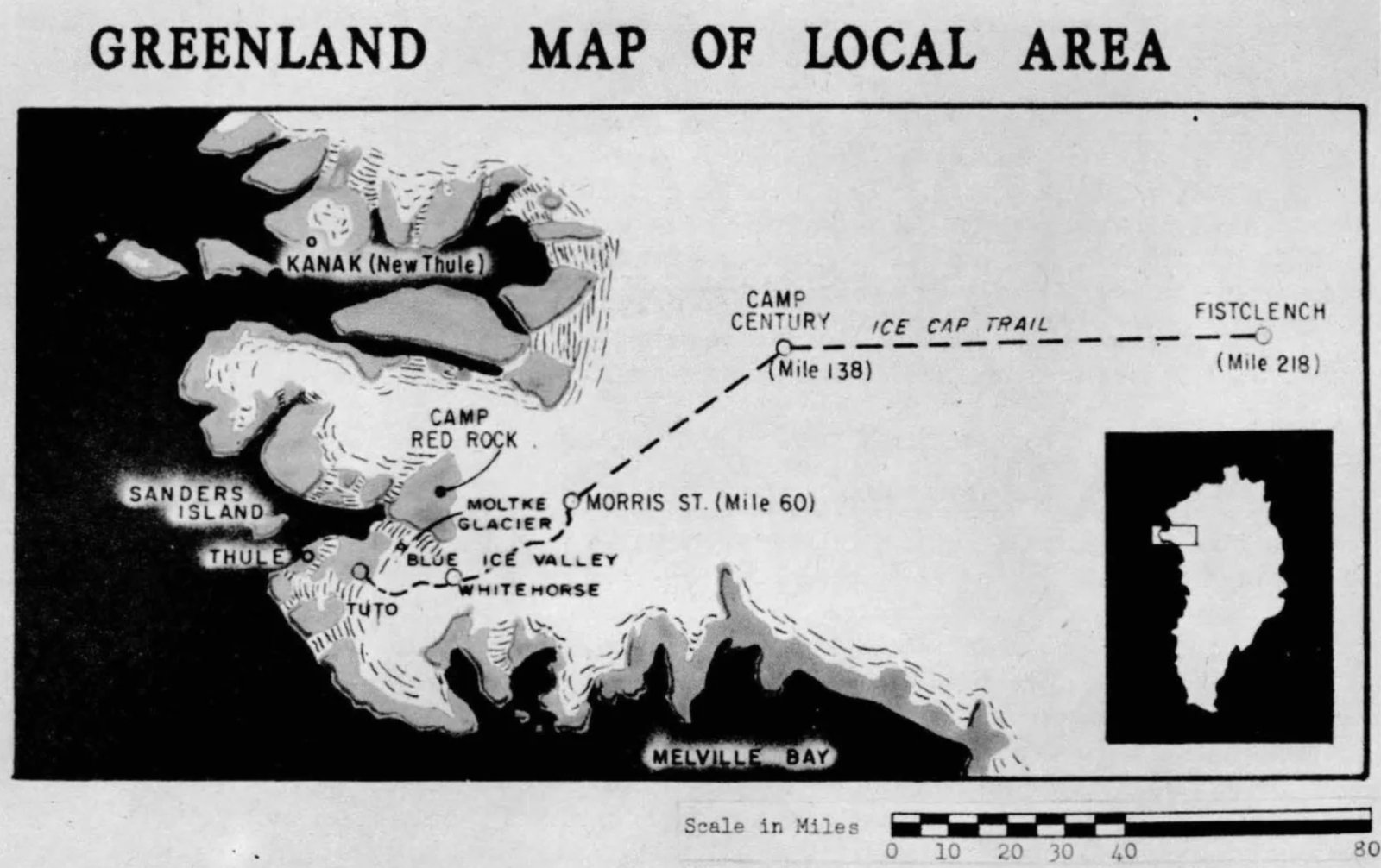
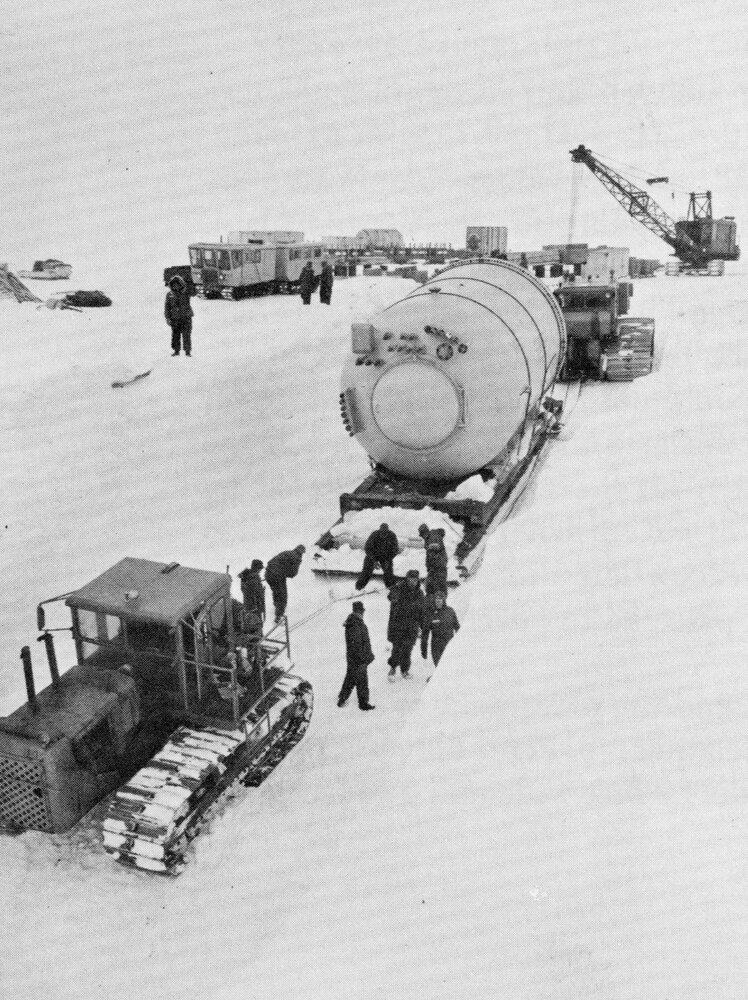
Instead, they gather their supplies and mount heavy sleds pulled by Caterpillar tractors with extra-wide crawler treads and travel 150 miles out onto the ice cap. The trip takes 70 hours in ideal conditions.
At 6,000 feet above sea level, temperatures dip to -20°C and colder. Compasses no longer work. There are no signs of life there; not seals or caribou, not even the purple saxifrage that flowers in piles of snow.
But their mission continues driving them to within 800 miles of the North Pole. They’ve come to conquer the ice. They’ll do it by constructing a nuclear-powered underground base for 85 to 200 men, a site the Army announces will be used to conduct year-round scientific and military research.
The official name was Camp Century. Its nickname was the “City Under the Ice.” For a time, it was home.
The City
First, engineers selected the building site. There were crevasses to navigate on their journey inland. On the ice cap, they sought a plain with less than 1 degree of slope. Above all, they needed access to ice cores: geological specimens deep inside the ground that researchers longed to study for what they would reveal about climate and geography from thousands of years ago.
Camp Century’s construction plans called for building a system of 23 trenches cut into the ground, branching off from a main corridor with networks and supplies. Diesel fueled powerful Alpine snow plows that cut into the ground. Each tunnel was 15 feet wide and held in place with steel beams covered with snow that froze back into place.
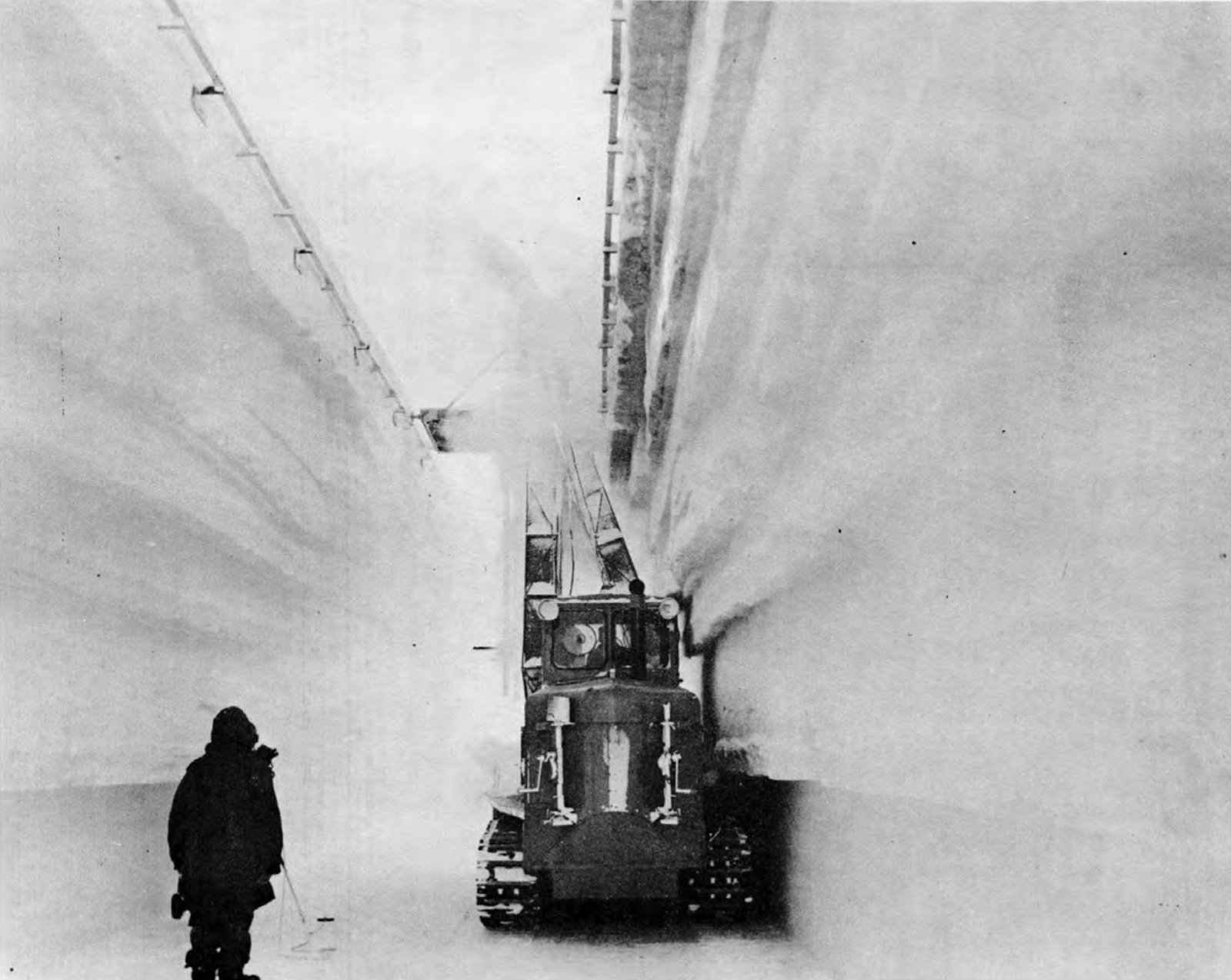
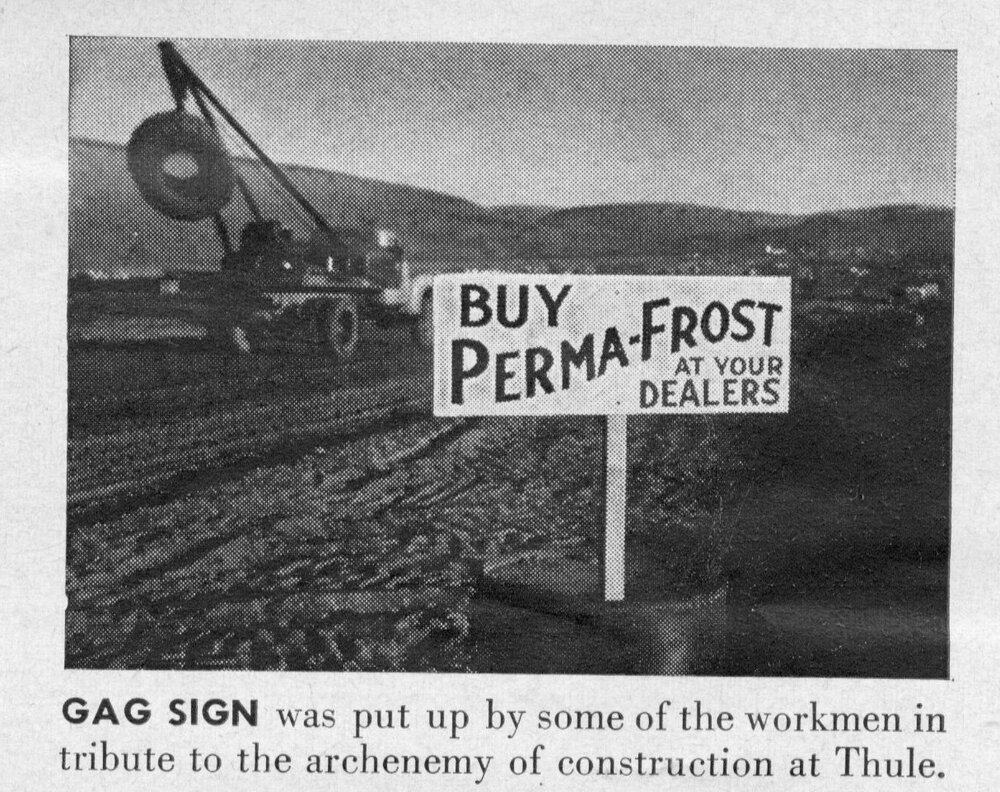
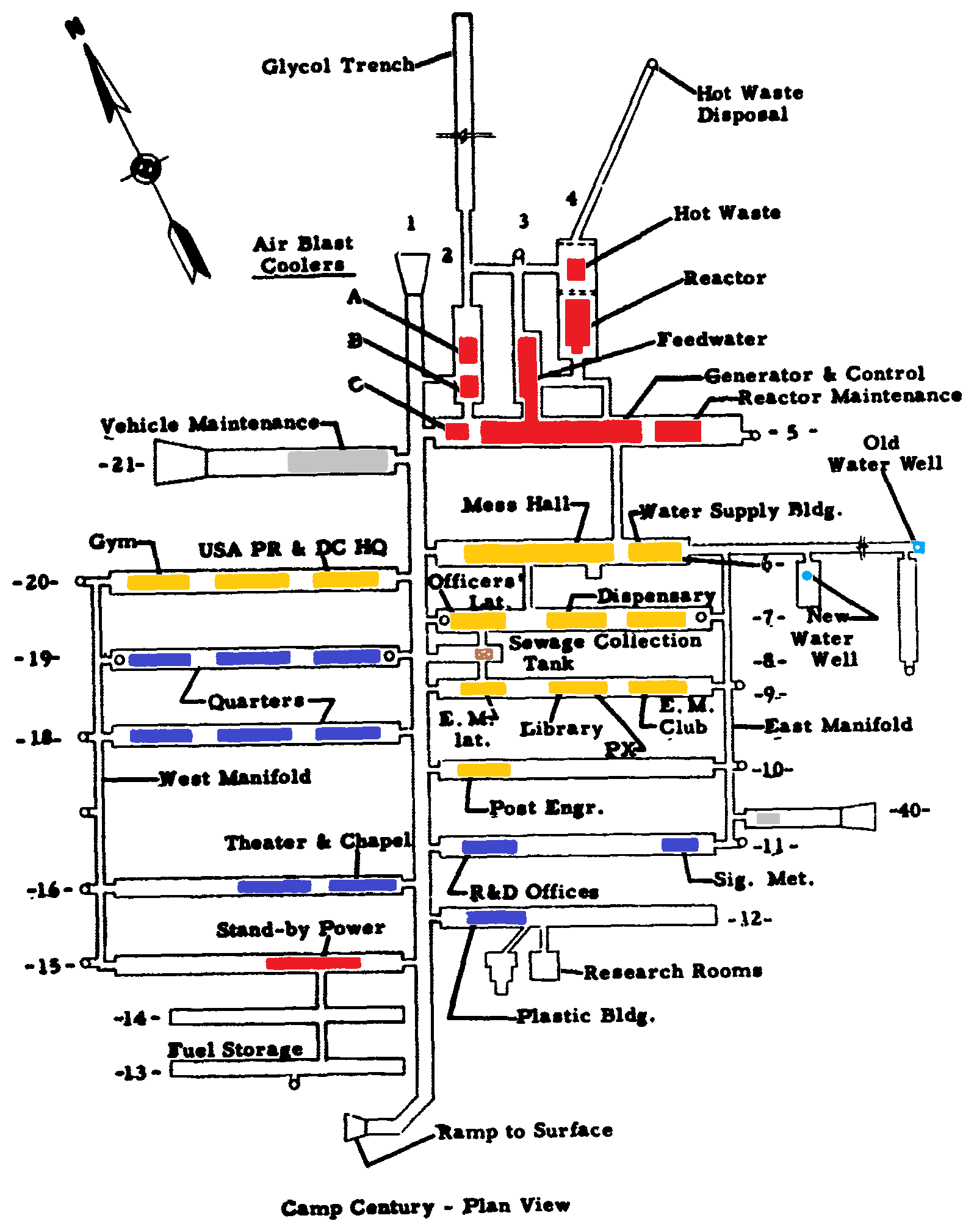
There was space for game rooms, a gymnasium and a hobby shop. There were movies, TV and radios along with a hospital, chapel and barber shop. Mukluk, a Siberian husky brought along for the expedition, wandered among the workers in 24-hour daylight.
Camp Century was constructed with spacious dormitories. Soldiers received one-and-a-half times their normal rations. Steak and ice cream were in ample supply. Showers had hot water. Work areas were kept at 40°F, living areas 60°F.
The entire camp took 16 months to complete, from June 1959 to October 1960. It cost $8 million and required 6,000 tons of supplies.
The Heartbeat
At the heart of the struggle against the ice was the PM-2A nuclear reactor that powered the camp, providing heat and light in an otherwise uninhabitable location.
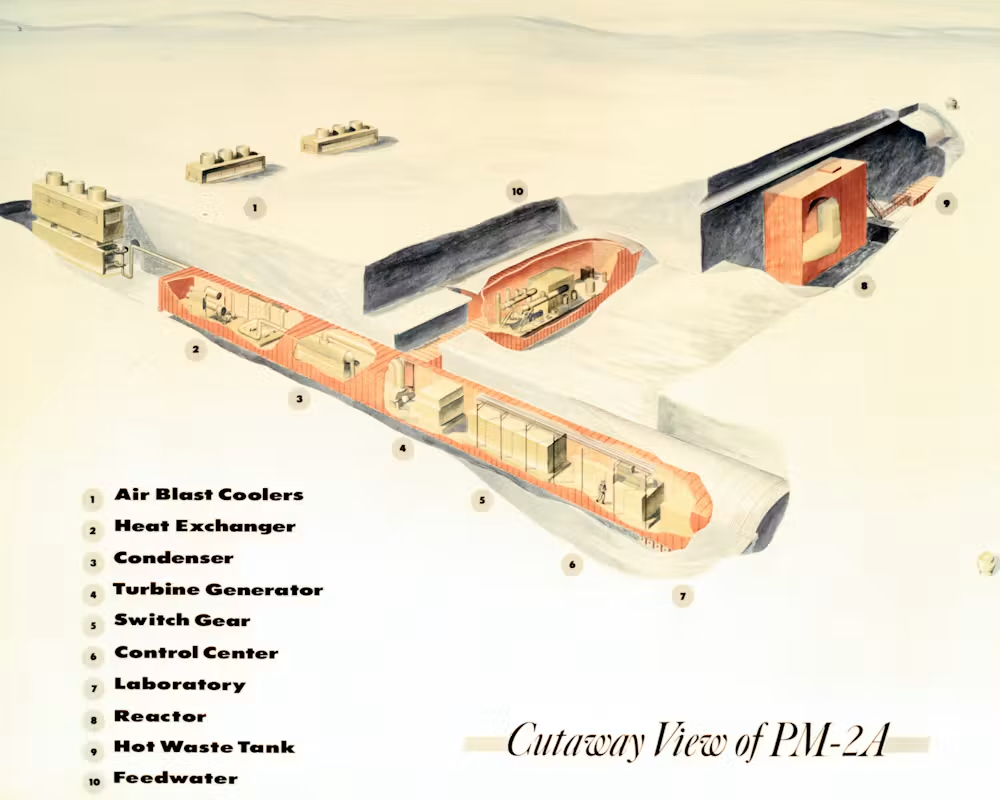
Built off site, the reactor was shipped in pieces transported via a network involving the Navy, Air Force and the Army Corps of Engineers traveling over land, sea and air. Some parts were hauled over the 3-mile road crews built leading up onto the edge of the ice cap along with treated lumber, steel arches, prefabricated houses, diesel and massive amounts of food.
But even near the start, there were hints that Camp Century might become more than a research hub.
The Secret
The importance of Arctic research was well established by the time Camp Century construction began. In the 1950s, the American Corps of Engineers had already built several research bases on the Greenland ice cap, though none were capable of operating year-round.
The ice also held a secret of a different kind. The military called it Project Iceworm.
Although it never came to fruition, there were plans to use Camp Century to conceal up to 600 ballistic missiles closer to the USSR, potentially serving as a launch site in case the Cold War became hot. The U.S. hoped to achieve the ability to deploy nuclear missiles from the Arctic and store them in a network designed to survive a first strike.
Though Project Iceworm was initially classified, the idea behind its broader mission was already on the public radar.
A 1960 Popular Science magazine article describing Camp Century quips, “The working areas will be dominated by scientific laboratories, but should the need come for a similar military installation—perhaps an under-ice launching site for intercontinental ballistic missiles or interceptors—we have the blueprints, the techniques, the machines.”
The Removal
But before Denmark, through the North Atlantic Treaty Organization, greenlighted Camp Century without knowing the full scope of the plans, it had already approved the land for it.
In 1953, Denmark forced 100 Inughuit people from their homes in Thule and other nearby settlements and required them to move with only a few days’ notice to Qaanaaq, Greenland. The reason was to make room for Thule Air Base, the U.S. military outpost that eventually made Camp Century possible only a few years later.
In the 1950s, Denmark had declared itself nuclear-free. Project Iceworm had assumed a nuclear arsenal could be buried there anyhow.
The original plans called for Camp Century to include thousands of miles of tunnels cut into the ice and lined with railroad tracks that connected with Thule Air Base. Flatbed cars carrying the missiles would stay in constant motion, powered by a nuclear reactor, to make the projectiles difficult to pin down or intercept.
But those plans never went anywhere.
The Surprise
Greenland’s ice sheet, for all its surface-level monotony, is in constant flux. Camp Century was built into relatively soft, porous ice known as firn. What the engineers didn’t realize is how susceptible it was to shifting laterally, causing the tunnels to slowly collapse under their own weight. The ice wasn’t static, either. It was moving horizontally at three-and-a-half meters a year.
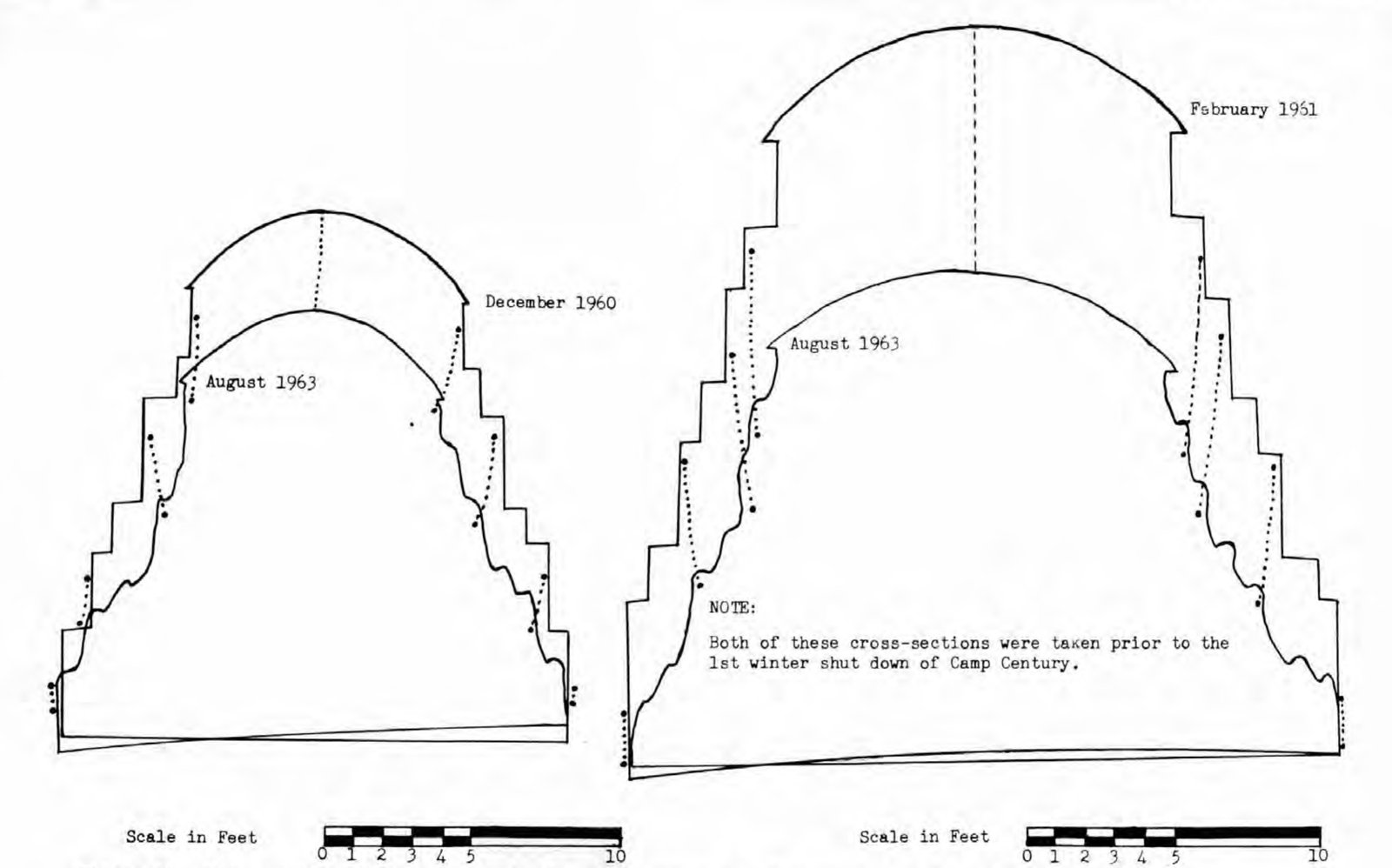
The cost and labor involved in maintaining the nuclear reactor in such a remote location began to outweigh the benefits. The Joint Chiefs of Staff rejected Project Iceworm. In 1964 after less than four years of operation, the reactor was shut down. By 1967, the camp was abandoned.
The Remains
When Camp Century was decommissioned, military officials removed the nuclear reaction chamber but left the camp’s infrastructure and waste behind. They thought the snow and ice would take care of it.
In the decades since it was closed, snow has buried the camp more than 100 feet further underneath the ice. The waste left behind covers 136 acres and includes roughly 200,000 liters of diesel fuel, 24 million liters of untreated sewage, toxic PCBs, and radioactive coolant from the nuclear generator.
Both Denmark and U.S. officials assumed the ice would bury these problems forever.
The Discovery
Before the camp shuttered, scientists from the Army’s specialized research establishments, including ice core scientists Chester C. Langway and B. Lyle Hansen, drilled through the entire thickness of the ice sheet at Camp Century—some 1.4 km—using two different drills over five years.
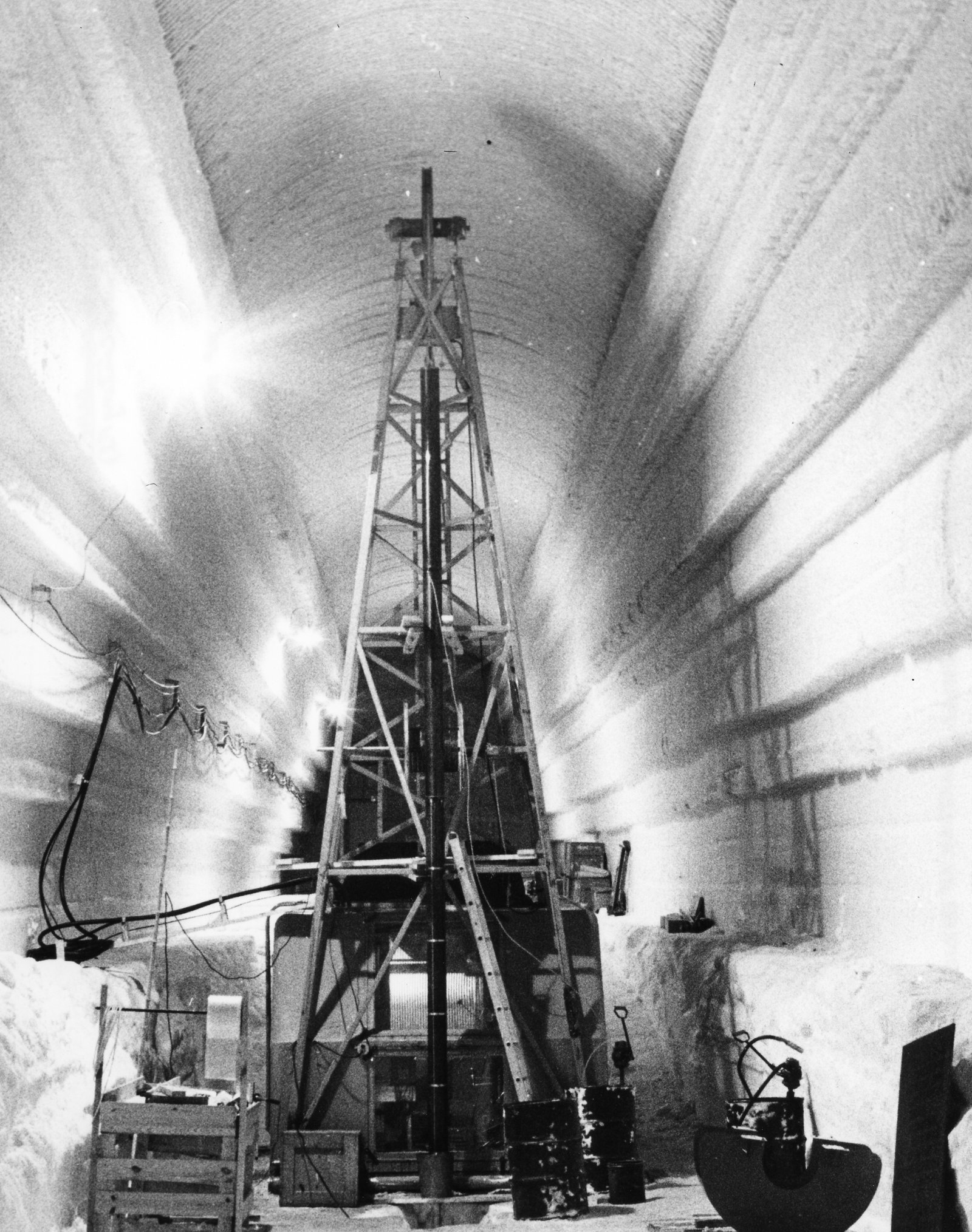
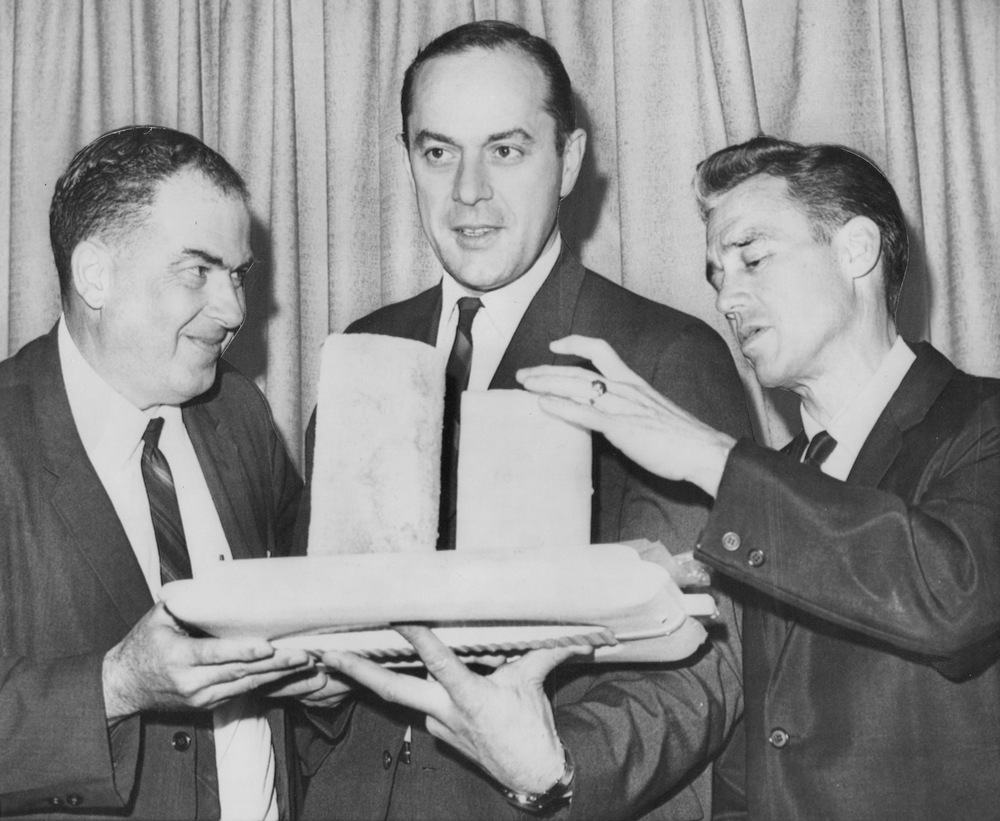
In 1966, they reached the bed of the ice sheet and recovered a nearly three-and-a-half meter long core of subglacial sediment. Using a property of water molecules linked to atmospheric temperatures, their studies unveiled findings about the planet’s climate history of the last 100,000 years.
But not every component of the ice cores was studied. Instead, the samples were sent to the Centre for Ice and Climate at the Niels Bohr Institute at the University of Copenhagen in the 1990s and remained there until rediscovered during a broader inventory in 2017.
51 years passed before anyone looked inside.
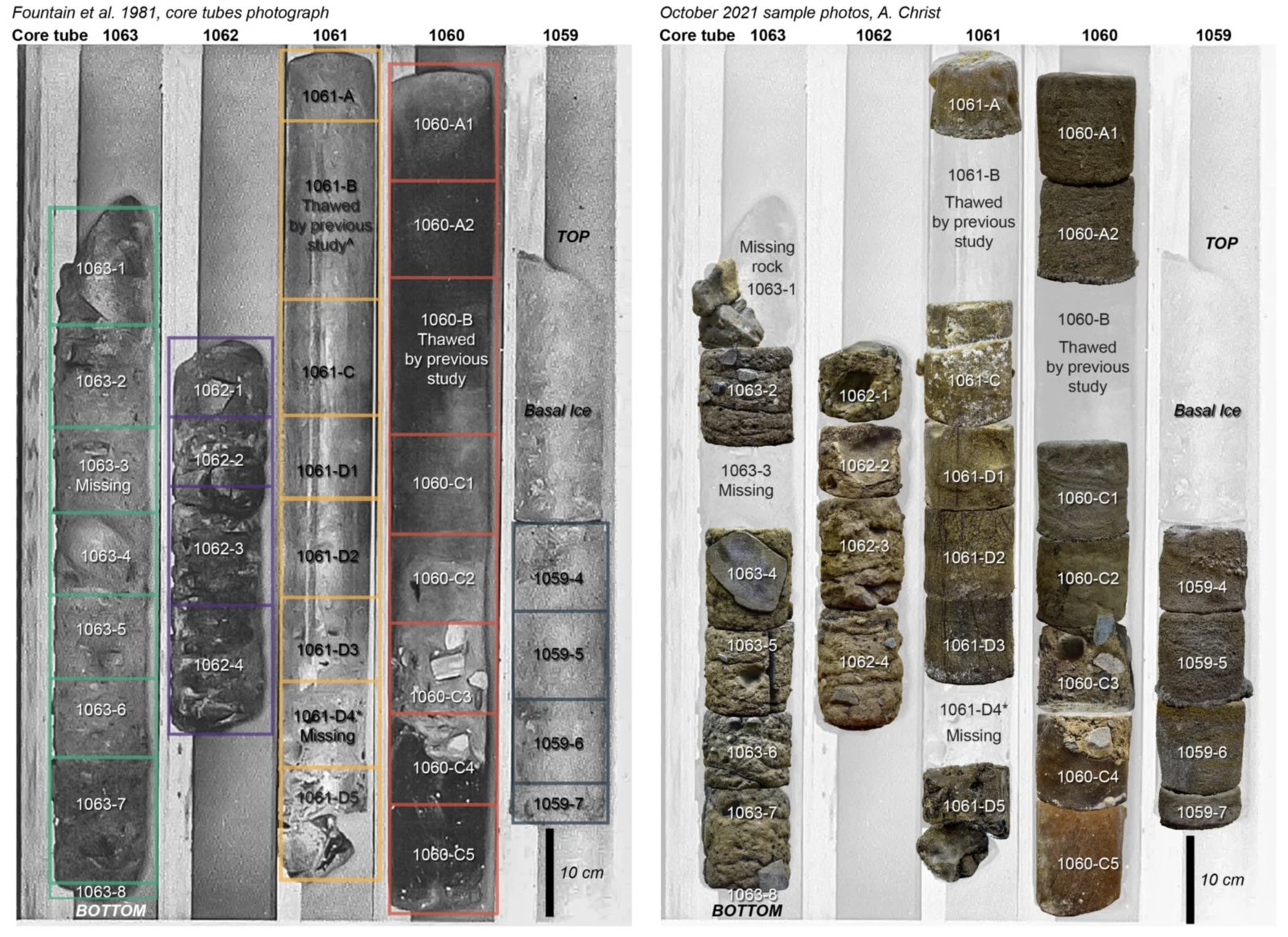
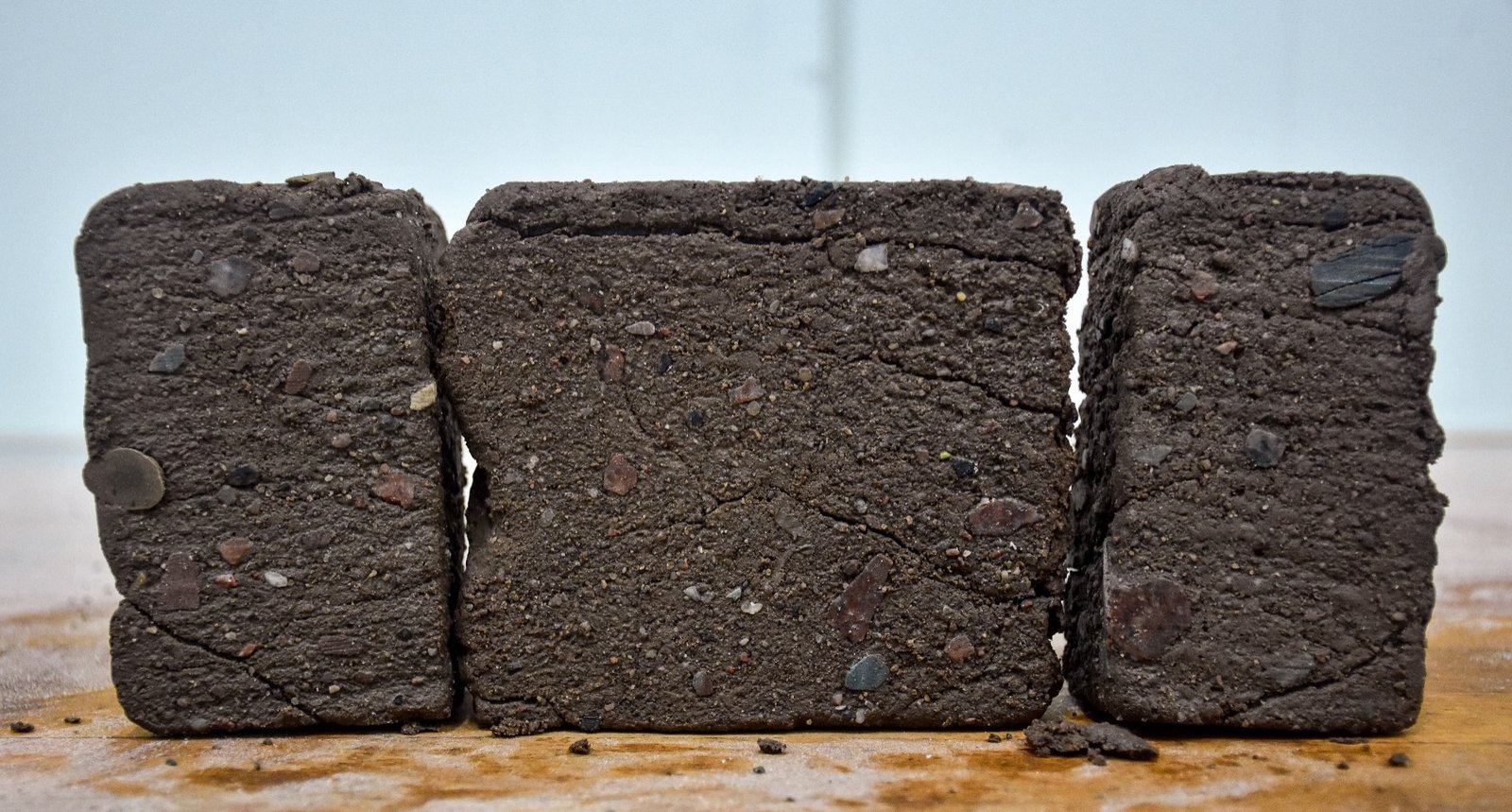
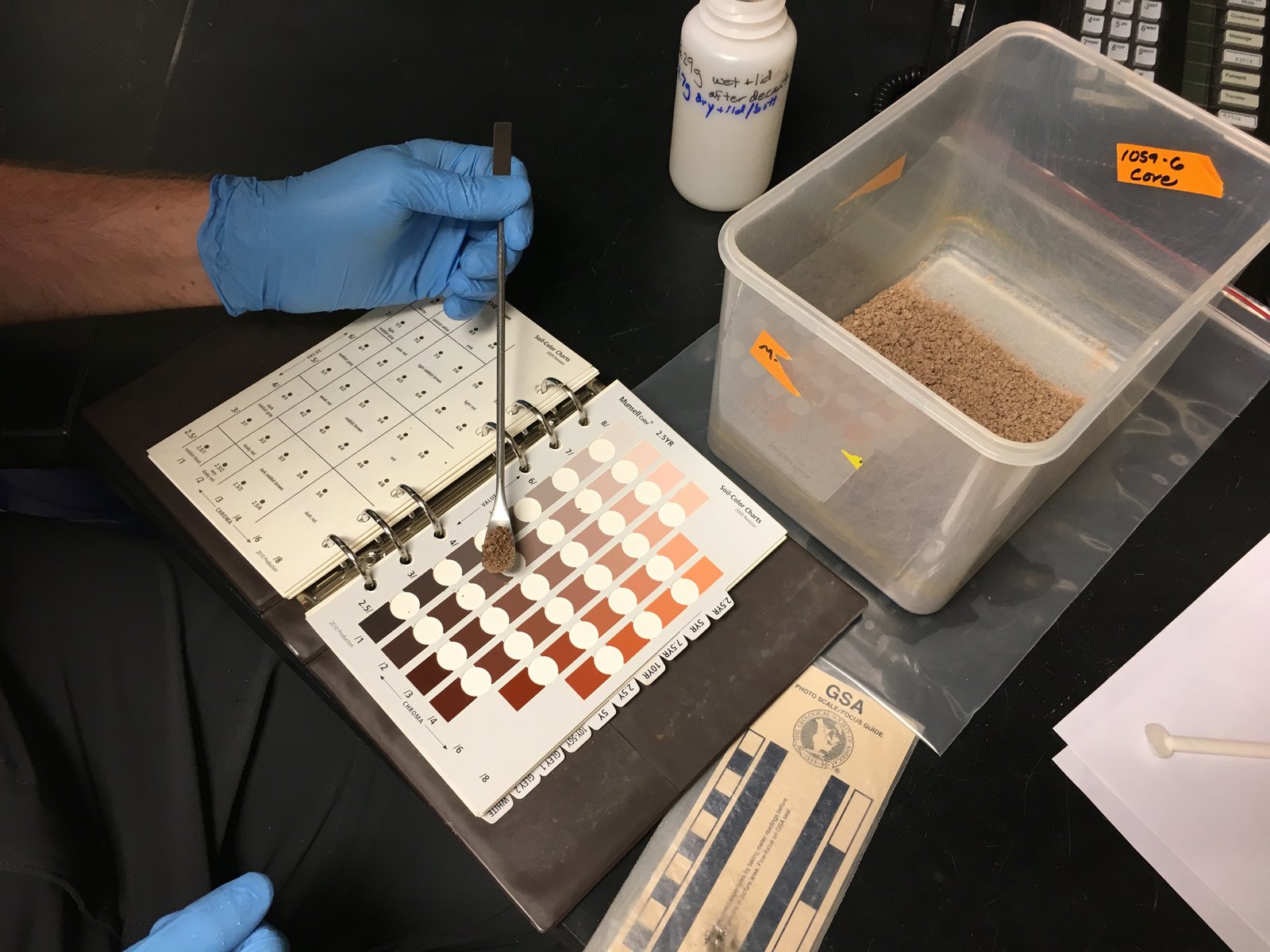
What they found surprised the scientists who opened them: Greenland hadn’t always been under ice. Around 400,000 years ago, it was warm enough to leave behind evidence of plant life where there’s now only ice.
In 2016, researchers had already presented a troubling scenario based on models: under a high-emissions scenario, Camp Century could transition from accumulating ice to losing it within roughly 75 years. If that happens, the waste buried there could eventually be released and remobilized.
The Question
The planners who built Camp Century and abandoned it assumed the base would be “preserved for eternity” by perpetual snowfall; more recent monitoring suggests that timeline may run longer than first feared, but the problem hasn’t gone away.
The people living closest to the ice will feel it first. For the Inughuit, whose communities have long depended on the Arctic landscape for hunting and fishing, a changing ice sheet has immediate implications.
Melting ice means rising seas, displacement and new pressures on governments and policymakers. The question of who’s responsible for the waste left behind at Camp Century remains unsettled. The region has no institution built with the authority to manage what the ice may release.
The waste remains, the future is approaching, and the ice Camp Century set out to conquer is still getting the final word.
Story
Yamal Anthrax
The Land
July 2016. Temperatures on the Yamal Peninsula in northwest Siberia reach 35°C. In the Nenets language, Yamal means the “End of the Land.” The peninsula extends about 700 kilometers north into the Kara Sea, above the Arctic Circle, and is underlain by permafrost. Snow can fall in June. July is usually far milder than this.
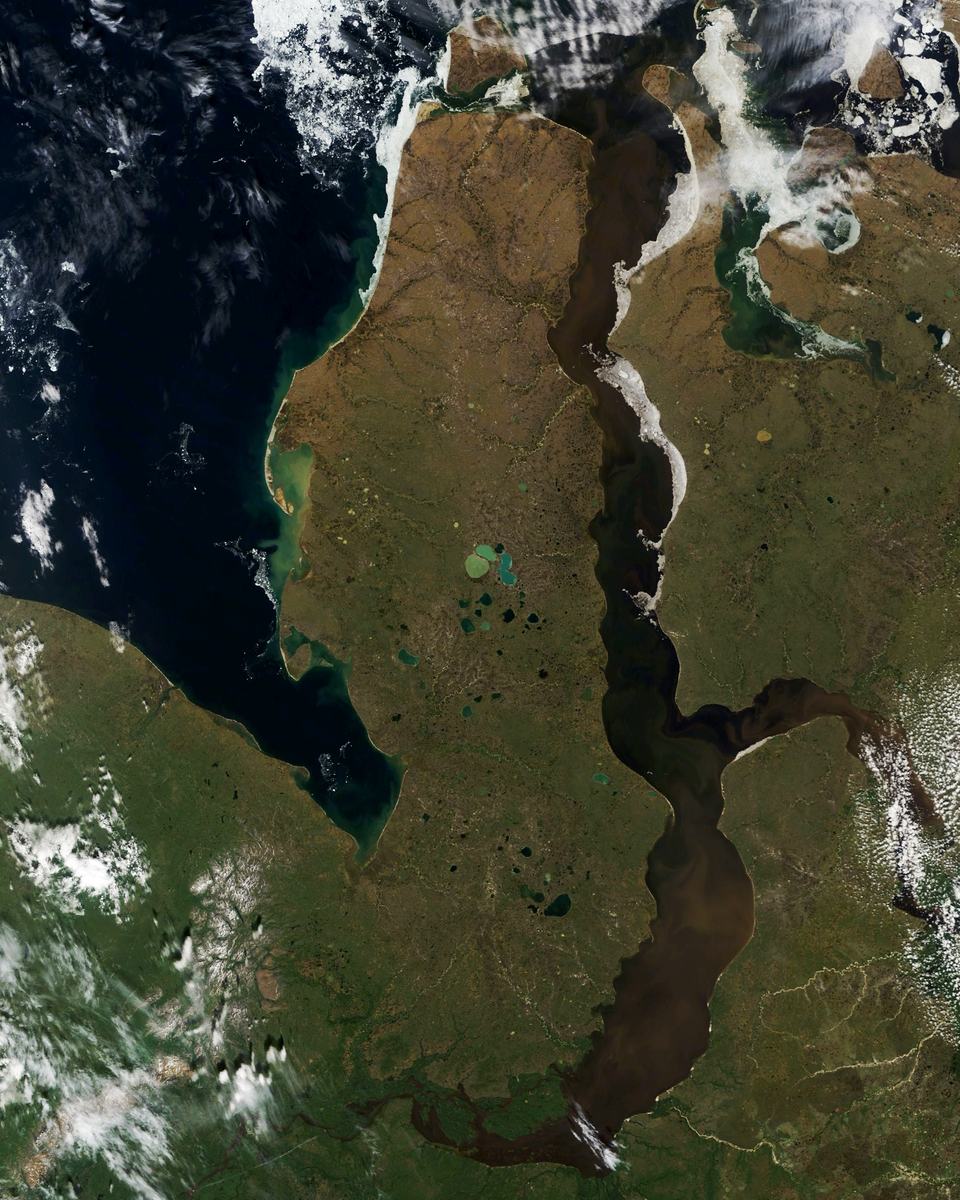
The Nenets have herded reindeer across this ground for hundreds of years. Families move with their animals year-round, north to the coast in summer, south to the forest in winter, and then back. The Yamal-Nenets region has a reindeer population of over 700,000 animals. A reindeer is transport, meat, clothing, and the hide walls of the chum—the conical tent a family sleeps in.
The herds had already taken one blow. In the winter of 2013, heavy snow was followed by a thaw and then a hard freeze. The top of the tundra turned to ice. About 60,000 reindeer starved, some tearing up their hooves trying to reach the lichen underneath.
The Disease
Anthrax wasn’t new here. By the late 1920s, it was so common on the peninsula that veterinarians called it “Yamal disease.”
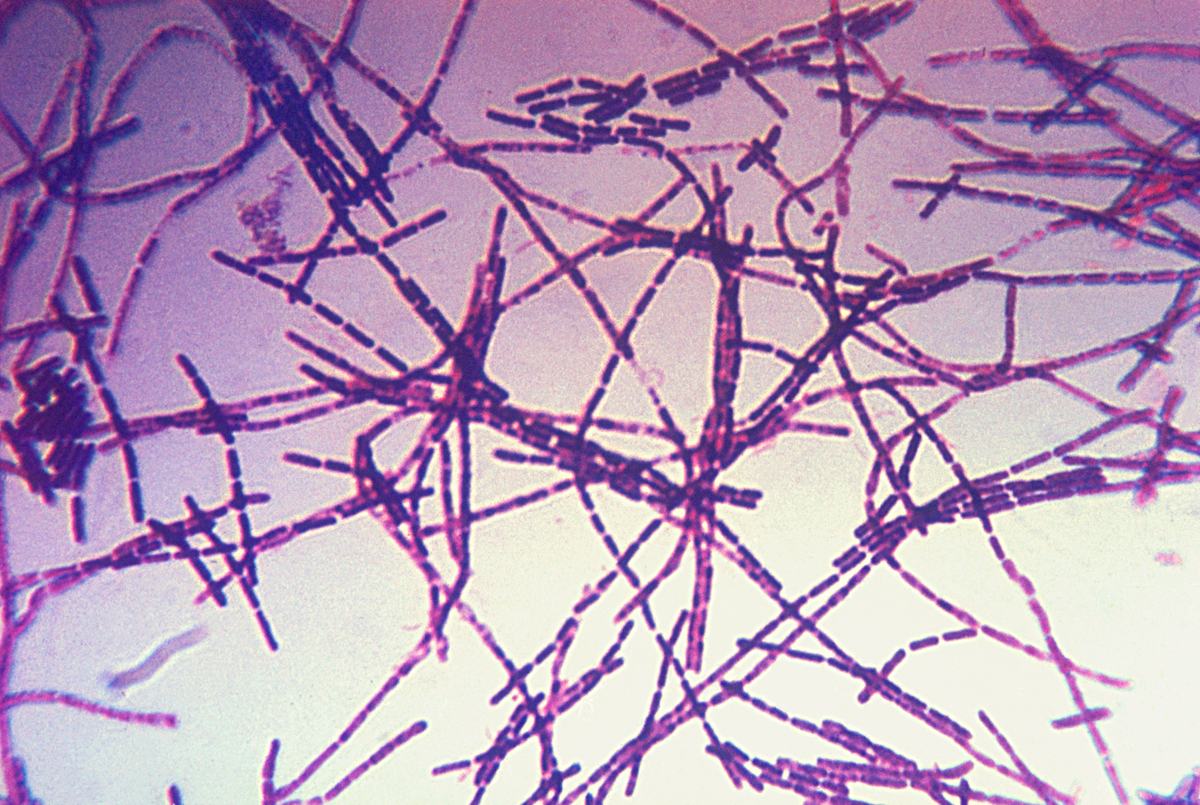
Vaccination campaigns beginning around 1930 eventually suppressed the outbreaks. The last recorded one came in 1941, killing about 6,700 reindeer. During earlier outbreaks, infected animals were buried in frozen ground. A carcass in permafrost was considered dealt with, even though anthrax spores can survive in soil for decades. There were no reliable records of which animals were buried on the tundra back when anthrax was common here.
Decades later and across the Arctic, U.S. Army planners made the same assumptions about permanent cold at Camp Century in Greenland. When the base closed in 1967, diesel, sewage, and reactor coolant remained under the ice, with snowfall expected to bury the site.
In 2007, the regional government ended routine anthrax vaccination of reindeer after decades without a recorded outbreak. By 2016, a large share of the herd was susceptible again.
The Heat
That summer, temperatures across the peninsula surged well above the average of the preceding decades. Monthly average temperatures in June, July, and August were 20%-100% above the preceding 30-year average. The permafrost thawed deeper than usual. Near Lake Pisyoto, reindeer began dying on their summer pastures.
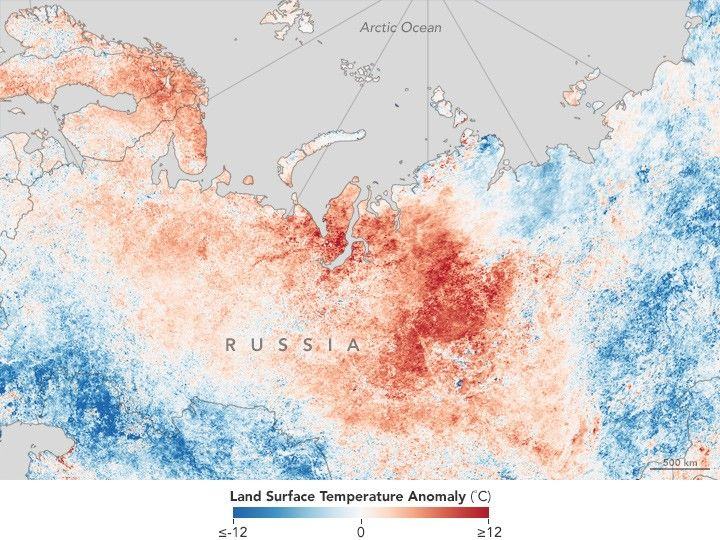
Officials said anthrax spores may have resurfaced from a decades-old carcass or contaminated ground. The Russian veterinary scientists who studied the outbreak called that explanation plausible but not proven.
Reindeer were dying in three places at once, near Lake Pisyoto, on the Novoportovskaya tundra, and along the Evayakha River, up to 250 kilometers apart and separated by the Gulf of Ob and the Taz Estuary.
The Outbreak
Alexey Nenyanga, who lost most of his reindeer that summer, was there when it started. “You feed a reindeer and step away – and it suddenly drops dead,” he said. “Within a day it swells up like a ball ready to burst. We thought the heat was to blame, as they were still in their thick winter coats. A neighbour lost 50 of them.”
The region declared a quarantine. Helicopters began lifting families off the tundra and flying them to Salekhard, the regional capital. By July 28, 13 people had been hospitalized. Officials were still describing the human cases as probable anthrax.
On Aug. 1, a 12-year-old boy died of anthrax, according to a statement from Yamal-Nenets Gov. Dmitry Kobylkin. “The infection has shown its guile,” Kobylkin said. “Returning after 75 years it has taken the life of a child.”
By early August, 90 people were in the hospital, 53 of them children.
By the end of the outbreak, 2,650 reindeer had been infected. About 2,350 died, 6.5% of the susceptible population. Thirty-six people were confirmed to have anthrax. One of them died. Nearly 400 people were evacuated, and over 100 were hospitalized.
The Response
What followed was a military operation. Over 250 military personnel and 30 vehicles arrived from the Central Military District. The first unit, flown in from Yekaterinburg, brought a mobile laboratory and 30 tons of decontamination agents. They mapped the outbreak’s boundaries from the air before sending crews onto the ground.
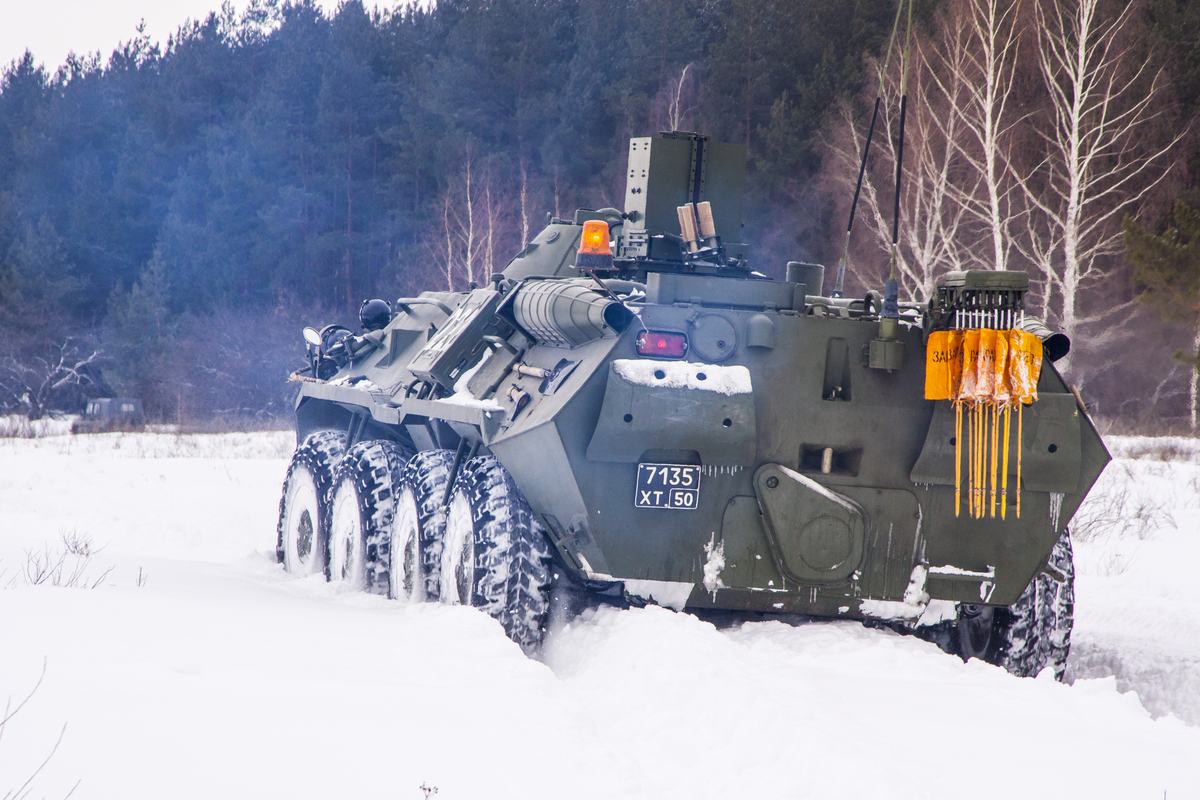
Over three weeks, they incinerated 2,572 carcasses and treated the ground with bleaching lime. With no roads, the carcasses were burned where they lay, on old tires and oil products.
“People were evacuated, dogs put to sleep, chums (traditional Nenets tents) and sledges and everything were set on fire,” Nenyanga said. “Nothing was left. Then, calm ensued: they built new chums for us and we hoped that there might be some form of compensation. The state is lending a hand at the moment, but what the future holds, I don’t know.”
The regional government set aside 90 million rubles, about $1.3 million at the time, for recovery assistance.
A chum could be rebuilt in days. A herd took years. Reindeer decided how far a family could travel, how much food it had for winter, and whether younger people could stay on the tundra. The operation had stopped the outbreak. It had also burned through the equipment and animals that made nomadic life possible.
Vaccination resumed in the affected areas. About 15,000 animals in the affected zones were vaccinated that September and October. Nine months later, 89% tested as protected.
The governor said later “a very serious mistake was made in 2007.”
Later that year, Kobylkin proposed culling up to 250,000 reindeer. Officials presented the proposal as a response to overgrazing and disease risk in dense herds. About 70% of the animals were privately owned, and officials said the owners refused both vaccination and slaughter.
Eiko Serotetto, a 25-year-old herder with 200 animals, petitioned Putin against it. “Every herder should decide the fate of their own reindeer,” he said.
The Ground
The outbreak was declared over on Sept. 13, after a three-week cleanup. Herders returned to land with a question they hadn’t needed to ask before: what else was under there?
One herder’s story traveled across the tundra that fall. He had lost 300 reindeer when the pastures iced over in 2014. Over the next two years, he gathered 100 animals and migrated to Lake Yarroto. In 2016, he was left with one reindeer.
There was no reliable map of the animal graves. “There are thousands of such cattle graves across Russia and many of them are inside the Arctic Circle,” said Sergey Netesov, who headed a microbiology and virology laboratory at Novosibirsk State University.
Under a high-emissions scenario, the scientists who studied the outbreak project about 49 more thaw days a year on Yamal by the end of the century. Every one of those days reaches a little deeper into ground that was supposed to stay frozen.
The Question
In 2005, Sheila Watt-Cloutier, then chair of the Inuit Circumpolar Conference, filed a petition with the Inter-American Commission on Human Rights on behalf of herself, 62 other named individuals, and Inuit communities in Canada and Alaska. The petition argued that U.S. greenhouse gas emissions violated their rights to culture, health, property, movement, and subsistence.
The commission declined to process the petition in 2006, saying it had insufficient information to determine whether the alleged facts constituted a rights violation. It later granted a hearing.
Years later, Watt-Cloutier gave that claim a name: the right to be cold.
On Yamal, cold had done the work of infrastructure. It was expected to keep disease beneath the ground and an old danger out of sight. Two decisions, 66 years apart, set up the outbreak: to bury infected carcasses in ground expected to stay frozen, and to stop vaccinating against a disease thought to be gone.
Vignette
The Opening Arctic
Retreating sea ice is transforming the top of the world from a wall into a shipping lane, changing the Earth’s surface and pressing sovereignty questions that were never settled because, until now, they never had to be.
As climate-driven ice melt makes parts of the Arctic more navigable, Canada and the United States disagree over the legal status of the Northwest Passage, China calls itself a near-Arctic state, seven of eight Arctic states are now in NATO, and the Arctic Council is operating under constraints it didn’t face before 2022.
While the Arctic warms three to four times faster than the global average, shrinking sea ice and opening trade routes are unsettling old boundaries and raising new disputes over who may extract, patrol and ship where. There is no single treaty or body governing the Arctic, only overlapping legal frameworks and cooperative international efforts destabilized in the wake of Russia’s full-scale invasion of Ukraine in 2022, alongside Arctic melt that is amplifying tensions with no clear structural mechanism to address them.
The number of ships entering Arctic waters grew by 37% between 2013 and 2023, creating legal and environmental implications when routes overlap with national jurisdictions. More traffic also means more noise, spill risk and invasive species, adding stress to the vulnerable Arctic marine environment.
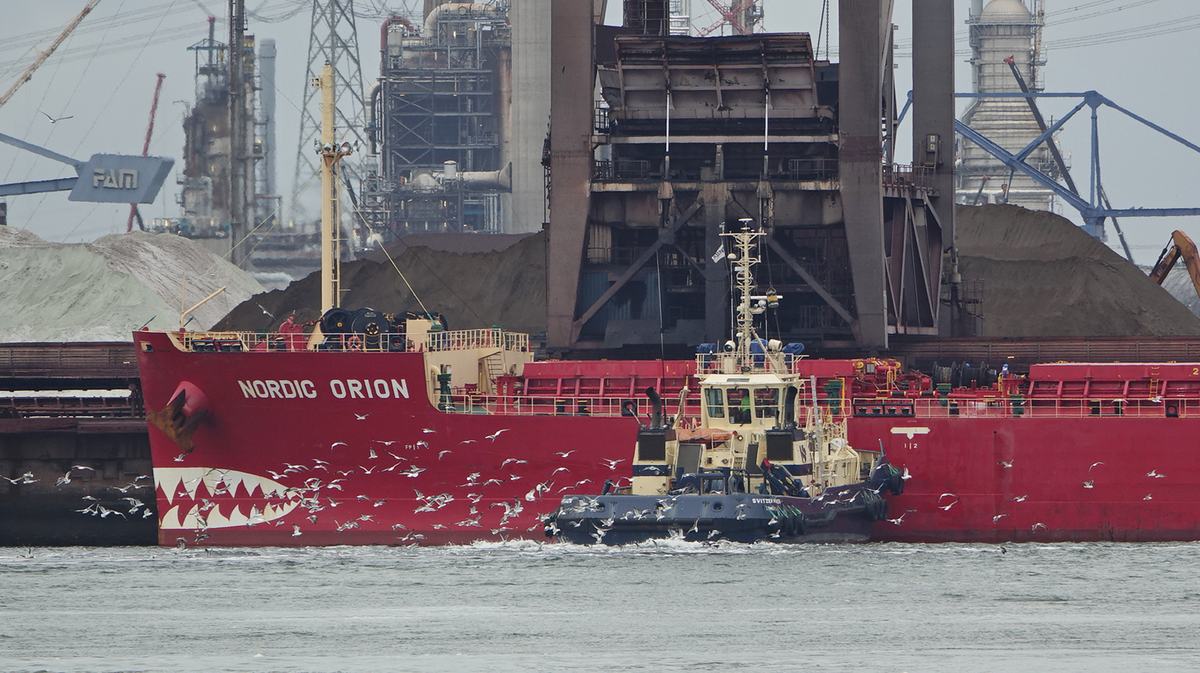
Infrastructure investments such as new ports, icebreakers and navigation aids can offer economic opportunities while disrupting the traditional hunting and fishing grounds Indigenous communities rely on for sustenance, as warming waters change where fish and marine mammals travel and where the people who follow them can live.
At the same time, increased Arctic shipping is associated with rising greenhouse gas emissions. One 2025 projection found that expanded Arctic routes could increase global shipping emissions by 8% by 2100, if the industry’s fuel mix doesn’t change, which in turn could contribute to climate-driven ice melt and accelerate the geopolitical tensions that accompany it.
Each of these tensions requires international collaboration, though the organizations that historically served as platforms for international decisions are themselves fractured. The Arctic Council, a forum that brings together the eight Arctic states — the United States, Russia, Canada, Norway, the Kingdom of Denmark, Iceland, Finland, and Sweden — and six Indigenous Permanent Participant organizations, has long been central to regional cooperation.
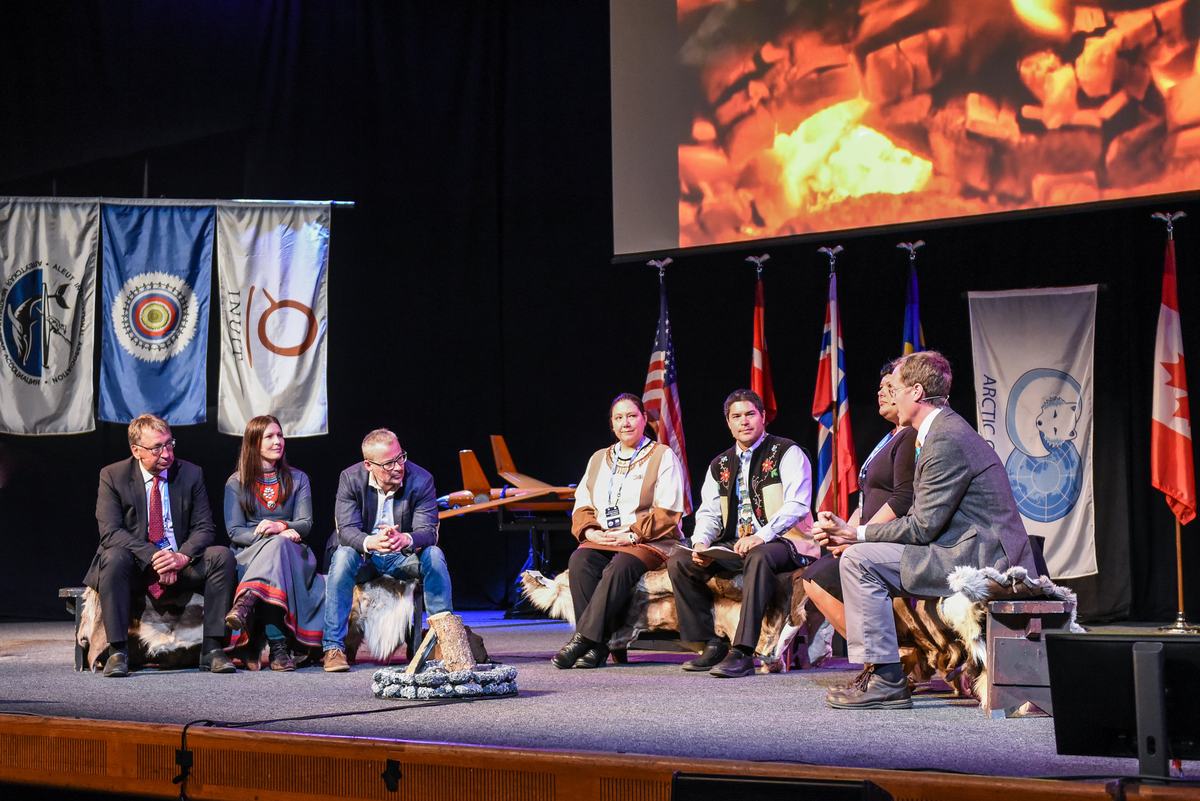
But since 2022, its work has been constrained. After Russia’s full-scale invasion of Ukraine, the other seven Arctic states paused their participation in the Council’s work. The Council later resumed selected projects and virtual working-group meetings, but it isn’t operating at its pre-2022 strength.
Still, facing Western sanctions, Russia has grown more economically reliant on China.
A July 2024 German Marshall Fund report found that Moscow has looked to Beijing to develop the Northern Sea Route, invest in Arctic energy projects and related infrastructure, including space and science, and enhance military cooperation. In return, the report said, Moscow has become Beijing’s conduit for greater activity in the Arctic
Morten Høglund, chair of the Senior Arctic Officials during the Norwegian Chairship of the Arctic Council, said the Arctic Council continues to provide valuable knowledge even as its work has changed shape.
“There’s no hiding that this is a challenge,” he said. “It has become very crucial that we do continue to have close contact and dialog with all Arctic States and Indigenous Peoples’ Organizations with Permanent Participant status in the Council.”
And cooperation among groups and organizations is happening even as challenges remain. Arctic Gateway Group, an Indigenous-owned partnership that operates the Port of Churchill, has partnered with shipping company Fednav to examine the operational requirements for possible year-round shipping operations.
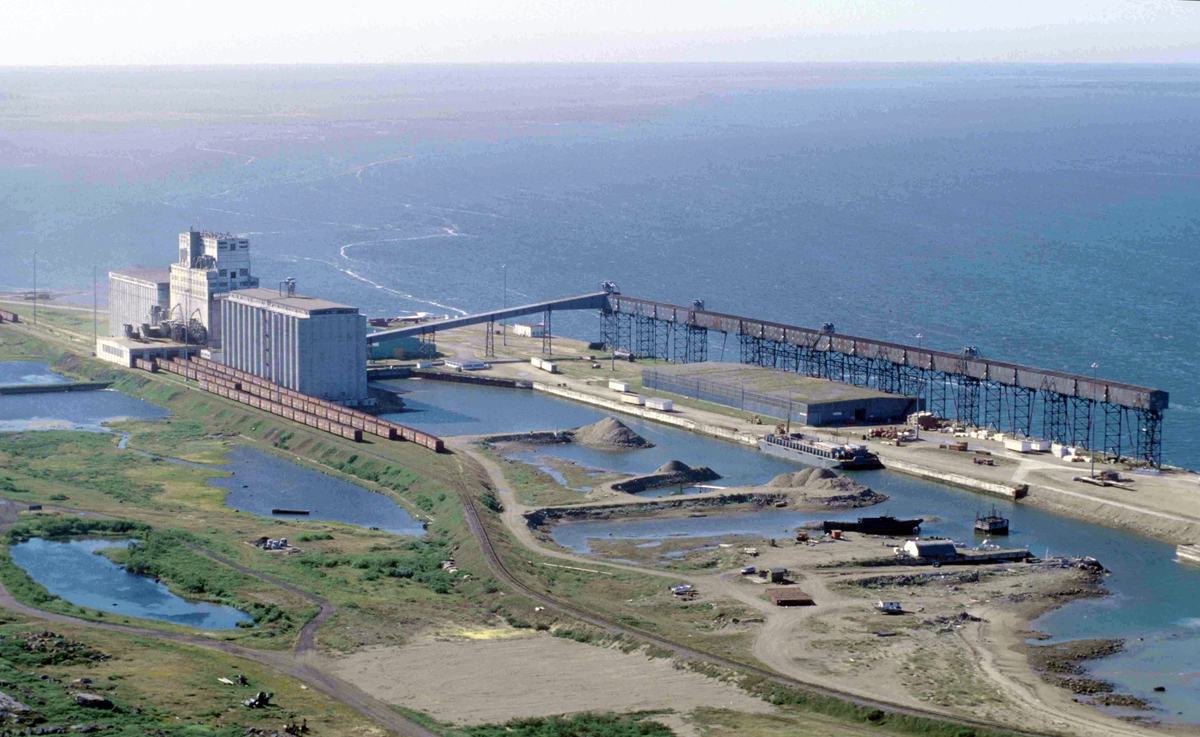
The partnership notes that the work “does not pre-empt environmental assessments, regulatory processes, or Indigenous decision-making,” and that “any future consideration of year-round shipping would require extensive engagement with Indigenous partners, northern communities, governments, and environmental stakeholders.”
How these negotiations unfold could reshape whether Arctic expansion benefits northern economies or disrupts them.
NATO’s role in Arctic geopolitics is also expanding. Russia’s invasion of Ukraine prompted Finland and Sweden to end military nonalignment and seek NATO membership. Finland joined in 2023 and Sweden in 2024. Today, seven of eight Arctic states are under the NATO umbrella, structurally altering the alliance’s Arctic profile from before 2022, when five Arctic states were NATO members
Whatever form it takes, cooperation that seats the people who live with the outcome will decide whether the opening Arctic is managed or merely contested.
Vignette
Antarctica 2048
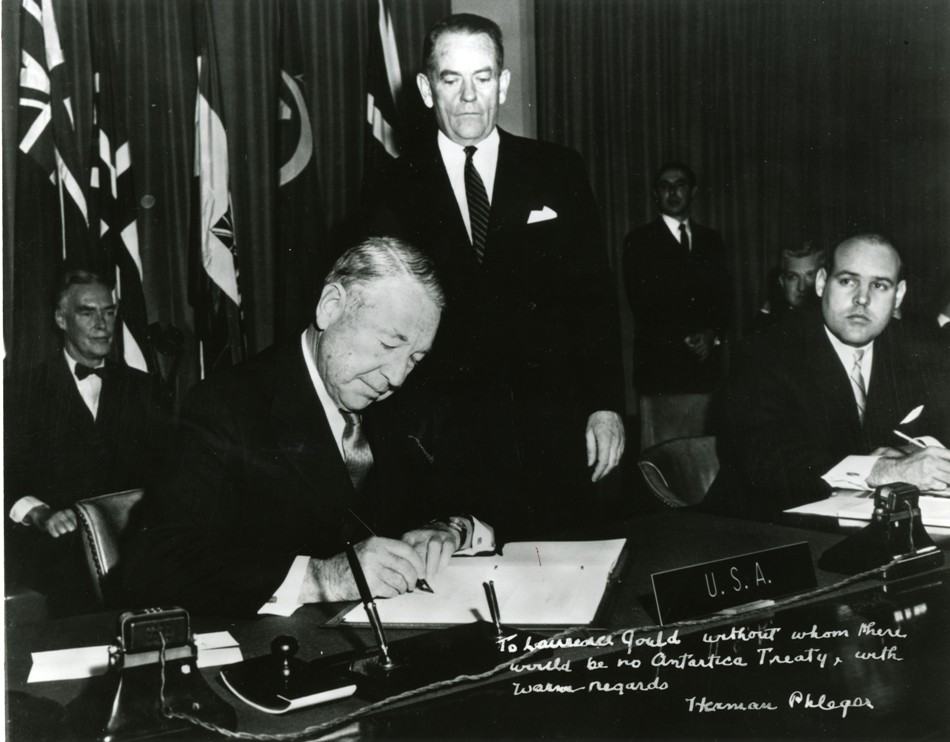
In 1959, at the height of the Cold War and the same year the U.S. Army began building Camp Century under the Greenland ice, a dozen countries agreed Antarctica would be used for peaceful purposes. The treaty prohibited military measures, nuclear explosions, and the disposal of radioactive waste. Decades later, a mining ban and environmental protections were added.
But that ban, known as the Madrid Protocol, can be subject to a review conference from 2048, and current pressures, such as krill fishing and growing state presence, raise questions about international Antarctic policies before and beyond that point.
The original Antarctic Treaty was an anomaly for its time. The nations that adopted it (Argentina, Australia, Belgium, Chile, France, Japan, New Zealand, Norway, South Africa, the Soviet Union, the U.K., and the U.S.) chose cooperation instead of conflict while collectively holding over 40 research outposts across a continent that had been relatively inaccessible and unexplored just one generation earlier.
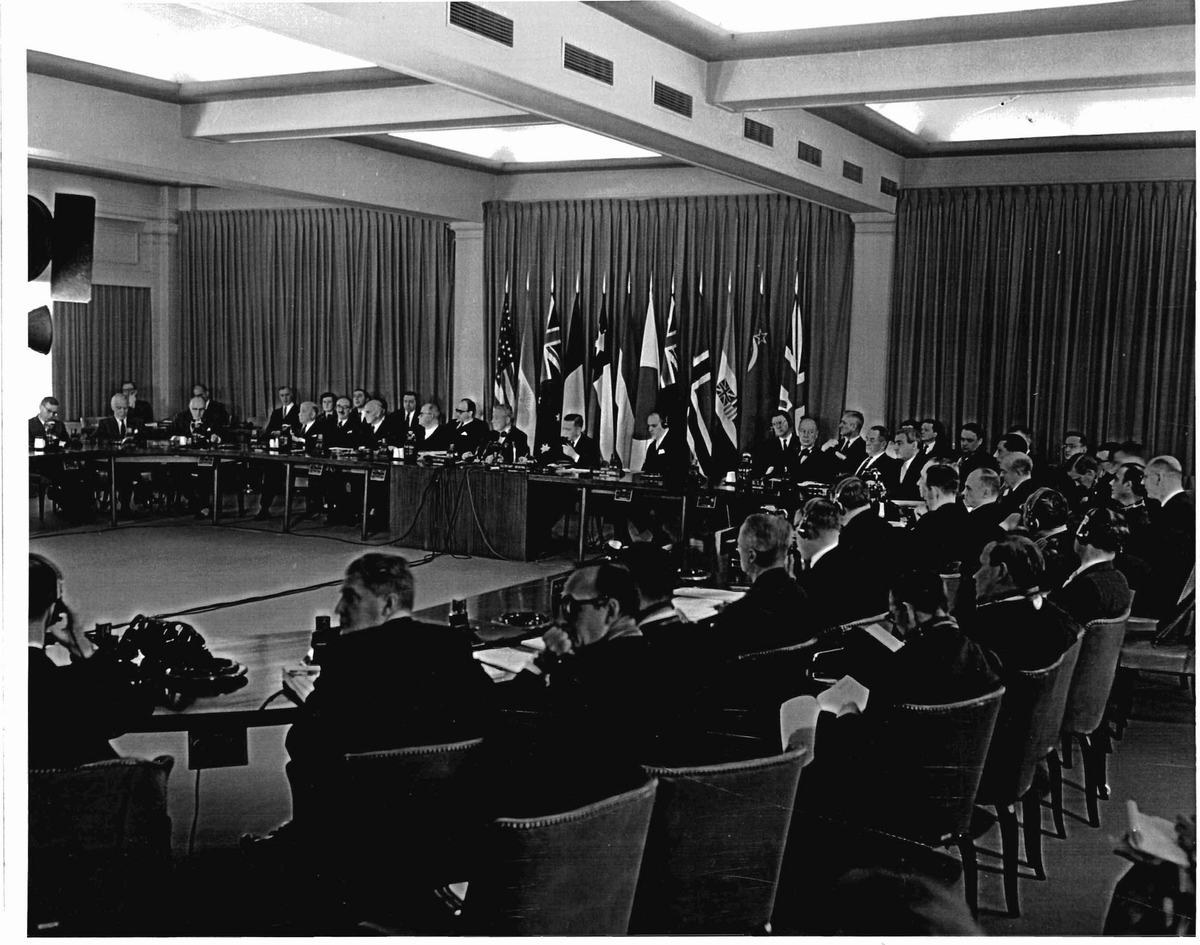
Britain, Argentina, and Chile held overlapping claims on the Antarctic Peninsula, and in 1952, an Argentine party fired warning shots at a British landing at Hope Bay. Instead of settling those claims, the treaty froze them.
The treaty grew out of the International Geophysical Year of 1957 to 1958. When it went into effect in 1961, it became what is widely known as the first arms control treaty of the nuclear age. It has held for 65 years.
The Convention on the Regulation of Antarctic Mineral Resource Activities (CRAMRA) was concluded in 1988. It would have opened the continent to regulated mining. In 1989, Prime Minister Bob Hawke announced that Australia would not sign it. France soon followed. Oceanographer Jacques Cousteau collected 1.5 million petition signatures in France and 250,000 in the U.S. to protest mineral exploitation in Antarctica. The pressure took on physical form. A French television broadcast shows the letters arriving at Fondation Cousteau’s Paris offices and the staff working through the count, weeks before France withdrew its support.
That was the hinge-point. CRAMRA never took effect, and in 1991, delegations gathered in Madrid to sign the Protocol on Environmental Protection to the Antarctic Treaty, which entered into force in 1998. The Madrid Protocol bans mining indefinitely, although from 2048, any Consultative Party can request a conference to review the protocol.
But the system is under strain. Commercial krill fishing is one source. Whales, seals, penguins, and seabirds rely on krill, and climate-driven ice melt is altering the habitat krill need even as the fishery intensifies. Krill also moves carbon from surface waters to the deep ocean each year. Meanwhile, China and Russia are expanding their Antarctic presence through research facilities and satellite infrastructure that Center for Strategic and International Studies analysts have flagged as having potential dual-use applications, and both have blocked proposals for new marine protected areas.
The treaty is hard to break: it requires unanimity to amend and bars new claims or the enlargement of existing ones while it remains in force. The Madrid Protocol also set an extraordinarily high bar for changing the mining prohibition. Any amendment would require broad support among the parties and a binding legal regime for Antarctic mineral-resource activities before mining could become possible.
Each layer made the next one easier to build. Scientific cooperation produced a treaty that kept territorial competition in suspension, and that restraint gave the 1989 campaigners a rule to defend when Madrid raised the bar again. By 2048, the parties will have had nearly 90 years of practice at saying no together. A review conference will test that habit before it tests any clause in the protocol.
Vignette
Monitoring Goes Dark
In February 2022, Western governments and research institutions cut ties with Russian partners after the invasion of Ukraine. The decision was about a war, not science, but Arctic research lost access to a large share of the territory it was trying to observe.
Of the 94 research stations in the INTERACT network, 21 were in Russia. Losing access to those sites had implications beyond individual monitoring stations. Russia accounts for roughly half of the Arctic’s land area. Without its stations, the network lost much of its visibility across Siberia and its extensive boreal forests.
Efrén López-Blanco, a researcher at Aarhus University, is lead author of a 2024 Nature Climate Change study on the problem. His work focuses on the Arctic carbon balance, and he spent years working with measurements from places such as the Zackenberg research station in Greenland.
“One of the immediate issues that arises if we neglect the Russian boreal forest is that we have an underestimation of biomass, soil organic carbon,” López-Blanco told AFP. “This has potentially global consequences for important processes such as permafrost thawing, shifts in biodiversity, or even greenhouse gas emissions.”
The Nature study found that excluding Russian stations substantially reduced the network’s representativeness. For some variables, including precipitation and vegetation biomass, the resulting bias was comparable in magnitude to projected changes expected by the end of the century.
But the loss of access to Russian stations exposed an older problem: The network was uneven before the war. Even with Russian stations included, INTERACT stations tend to be located in somewhat warmer, wetter parts of the Arctic, with deeper snowpacks. Siberia and the Canadian High Arctic are particularly underrepresented.
The Arctic is vast, remote, and expensive to monitor. Research stations have developed where funding, logistics, and institutional infrastructure make sustained observation possible. A statistically optimal sampling design had little to do with it.
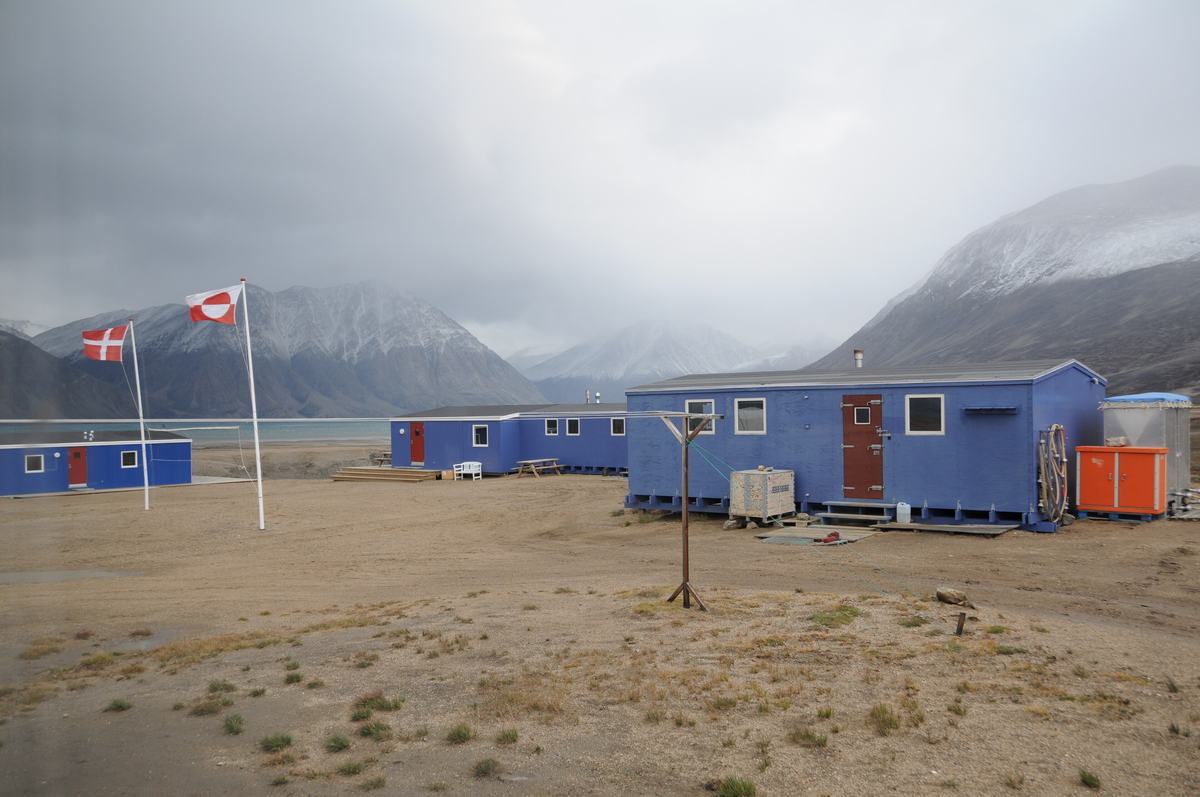
This is where Arctic monitoring begins to resemble a problem familiar to nuclear safeguards. In that field, “continuity of knowledge” matters because conclusions depend on an authenticated chain of observations over time, and the International Atomic Energy Agency uses surveillance and containment to preserve that chain between inspections. A 2014 Sandia paper lists elapsed time, authentication, and knowledge of system failures among the factors that decide how much confidence inspectors can place in the record.
Arctic observations and nuclear safeguards both operate within systems that expose the cost of a broken evidentiary chain. Once observations disappear, later measurements can’t simply recreate everything that would have been known had monitoring continued. A break becomes part of the knowledge problem.
The Arctic has another source of knowledge that formal monitoring systems have incorporated only unevenly: the people who live there. Arctic Indigenous peoples and other residents keep their own records of environmental change through hunting, harvesting, travel, and stewardship. Community-based monitoring can operate alongside conventional science and, in periods of disruption, may continue when formal research programs can’t. The Integrated Security framework puts it plainly: “The fundamental unit of security is not the state — it is the relationship.”
Noor Johnson and colleagues, writing in the journal Arctic, note that community observations can offer local perspective and strengthen coverage where conventional monitoring is thin. Recognition also requires consent and governance. Indigenous participants have raised concerns about monitoring technologies, especially in wildlife monitoring. Collecting observations is the easier part. Who decides what gets observed, how the data is used, and who benefits from it is the harder one.
Bringing Russian stations back online would close one gap. The hinge-point comes earlier, in the decision about whose observations count as evidence. Get that decision right and the record has a better chance of surviving the next border closing.
For policymakers, donors, and practitioners, the implication is practical. Fund monitoring infrastructure that can withstand the next geopolitical rupture. Fund partnerships in which Indigenous and community-based observations have standing as evidence and communities help govern their use.
A network tilted toward the warmer, wetter Arctic understates biomass and soil carbon across the region. Policies built on that record inherit its blind spots.
Questions
What our five principles ask of this Arctic Entanglement
Relationality
- With most Arctic Council work involving Russia suspended, which channels are left for responding together to a nuclear incident at sea, a major oil spill, or a search-and-rescue emergency? What would it take to keep them open?
- How does Indigenous self-determination affect how durable Arctic basing, mining, and shipping agreements are?
- What new relationship among scientists, communities, insurers, and governments could make the Arctic safer for everyone who depends on it, and who could start building it now?
Care
- What would change if the United States and Denmark treated Camp Century’s waste as an obligation they owe Greenland, rather than a liability to contain? How would that affect trust in the new security agreement?
- Diseases and oil spills cross even closed borders. Where are Russia and its Arctic neighbors vulnerable enough to the same threats that caring for each other, through joint outbreak warnings or spill response, would serve each side’s security during a confrontation?
- If safety rules for the Northern Sea Route were built on mutual obligation, so that each state and shipper answered for the risks it creates for others, how would oversight of nuclear-powered ships and floating nuclear plants change?
Accountability across time
- Which decisions being made now about shipping routes, resource licenses, and infrastructure will lock in risk for decades, and which can still be reversed?
- How do we assign responsibility for nuclear legacies like Camp Century when the institutions and agreements that created them may not exist when the ice gives way?
- The International Court of Justice found in 2025 that states have legal obligations to protect the climate system. How could AI help track Arctic warming and its consequences closely enough to hold states to those obligations, and leave a clear record for the generations who inherit the results?
Plurality
- Who notices change in the Arctic first: hunters, herders, fishers, shippers, insurers, scientists, or satellite operators? How do their observations reach decision-makers?
- What kinds of forums and processes, like the Arctic Council’s seats for Indigenous organizations, can bring these forms of knowledge together? Which practical, observational, and place-based knowledge will matter most?
- What would a shared picture of Arctic risk look like if it combined scientific data, Indigenous observation, and national assessments?
Coherence
- If the Northern Sea Route becomes navigable most of the year, what follows for spill response, fisheries and food security, Indigenous livelihoods, and competition among major powers?
- How would opening Greenland’s critical minerals to large-scale mining affect climate goals, local self-government, and geopolitical rivalry? Who is assessing those effects together rather than one at a time?
- What can AI do to map the second- and third-order effects of an Arctic decision across climate, health, nuclear, and political systems? Where must human judgment stay in control?
- How should AI climate and security models handle the loss of Russian Arctic data, and how would decision-makers know when a model is more confident than its data supports?
- What single decision could set off a positive chain reaction across the Arctic’s climate, health, nuclear, and political systems?